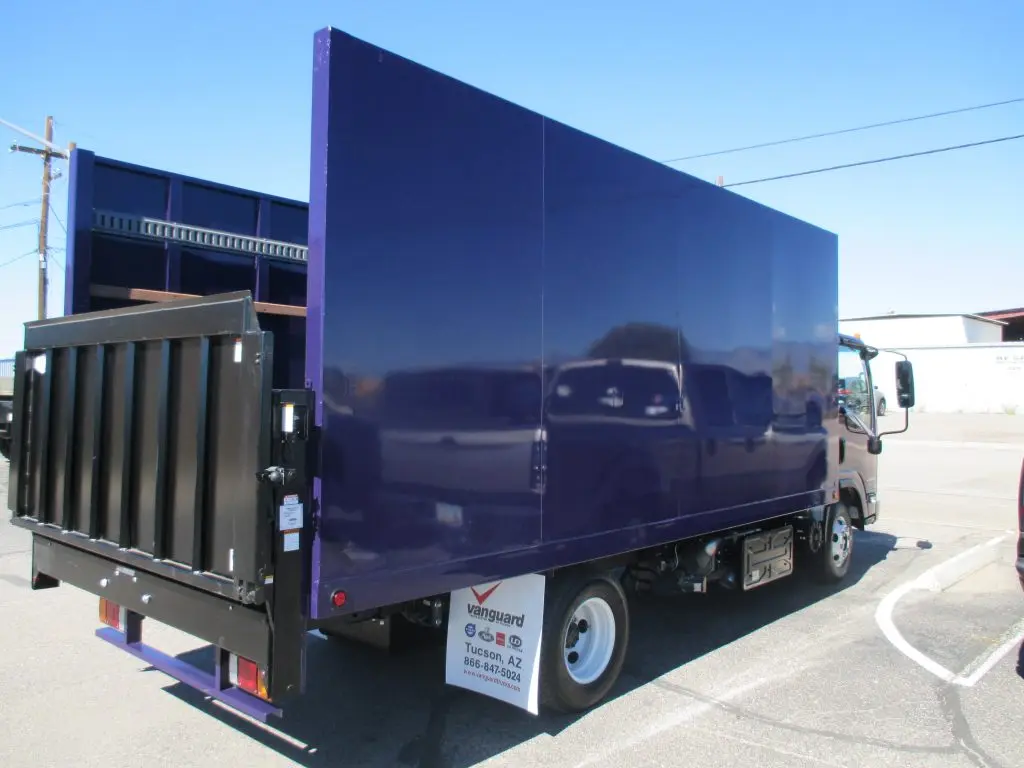
When you’re purchasing or replacing liftgates for your box truck fleet, the steel vs aluminum liftgate decision affects more than just the upfront purchase. This choice influences payload capacity, fuel efficiency, maintenance requirements, and how long the liftgate lasts under your operating conditions.
Fleet managers often approach this as a simple durability versus weight tradeoff. The reality is more nuanced. The right material depends on how you use your trucks, what you’re hauling, where you operate, and what matters most to your operation.
The Fundamental Material Differences
Before diving into application-specific considerations, here’s what separates steel and aluminum liftgates at the material level.
- Steel Liftgates: Steel gates use carbon steel construction, often with protective coatings or paint to resist corrosion. The material provides high strength relative to thickness, making steel gates robust and damage-resistant. Weight varies based on gate size and platform design.
- Aluminum Liftgates: Aluminum gates use aluminum alloy construction that naturally resists corrosion without additional coatings. The material weighs significantly less than steel for comparable strength, though achieving equivalent load ratings requires different structural approaches.
The core tradeoff: steel offers straightforward durability and damage resistance, while aluminum prioritizes weight reduction and corrosion resistance.
Weight Impact on Payload and Efficiency
The weight difference between steel and aluminum liftgates matters more for some operations than others.
Payload Capacity Considerations
An aluminum liftgate typically weighs several hundred pounds less than a comparable steel unit. For box trucks operating near maximum payload capacity, this weight difference translates directly to additional cargo capacity.
For operations hauling lighter cargo where payload capacity isn’t constrained, the weight advantage becomes less critical.
Fuel Economy Over Time
Lighter trucks consume less fuel. While savings seem modest on any single trip, the difference compounds over thousands of miles. High-mileage delivery fleets see more benefit from aluminum’s weight advantage than trucks covering fewer miles.
Operations running 30,000+ miles annually per truck gain more from weight reduction than those covering lower mileage.
Durability and Damage Resistance
How liftgates hold up under real-world use depends heavily on operating conditions and cargo handling practices.
- Steel’s Durability Advantages: Steel liftgates handle impacts and abuse better than aluminum. If your operation involves frequent loading dock contact, heavy equipment being rolled on and off, or harsh working environments, steel’s toughness pays off. Dents and dings that would damage an aluminum structure often barely mark steel.
- Aluminum’s Structural Considerations: Aluminum liftgates require more careful operation. The material dents more easily under impact, and repairs can be more complex. However, when operated properly, aluminum gates perform reliably for years.
Well-trained drivers who handle liftgates carefully experience fewer differences in material durability.
Corrosion Resistance and Climate Factors
Where you operate significantly affects which material performs better long-term.
Coastal and High-Salt Environments: Aluminum’s natural corrosion resistance shines in coastal areas, regions using heavy road salt, or anywhere with high humidity and salt exposure. Steel gates in these environments require diligent maintenance to prevent rust.
For fleets in coastal regions, northern climates with extensive road salt, or high-humidity areas, aluminum’s corrosion resistance reduces long-term maintenance and extends liftgate life.
Dry and Moderate Climates: In dry climates or areas with minimal salt exposure, steel’s corrosion disadvantage diminishes. Properly maintained steel liftgates in these environments last for years without significant rust issues.
Maintenance Requirements and Costs
Different materials require different maintenance approaches.
Steel Liftgate Maintenance: Steel gates need regular inspection for paint damage and rust development. Any scratches or chips should be addressed promptly to prevent corrosion. Annual inspection and touch-up painting help maintain steel gates, especially in challenging environments. Structural repairs on steel are straightforward and widely available.
Aluminum Liftgate Maintenance: Aluminum gates require less corrosion-prevention maintenance but need different care. The material can develop oxidation that should be cleaned periodically. Structural repairs on aluminum require specialized skills, and not every shop can properly weld aluminum.
Application-Specific Decision Framework
Rather than declaring one material universally superior, match material choice to your specific operation.
Steel Makes Sense When
- Trucks operate in controlled environments with minimal salt exposure
- Cargo handling involves heavy equipment or rough conditions
- Drivers are less experienced, or training is minimal
- Payload capacity isn’t a limiting factor
- Maintenance capabilities include regular rust prevention
Aluminum Makes Sense When
- Trucks operate near maximum payload capacity regularly
- Fleets cover high annual mileage (30,000+ miles per truck)
- The operating environment includes coastal areas or heavy salt use
- Drivers are well-trained in proper liftgate operation
- Fuel efficiency is a significant operational concern
Delivery Frequency and Use Intensity
How often you use liftgates affects which material advantages matter most.
High-Frequency Operations
Delivery fleets making 20-40 stops daily put constant demands on liftgates. This frequent use magnifies both weight and durability factors. Aluminum’s weight advantage reduces cumulative fuel consumption noticeably, but frequent operation also increases impact risk where steel’s durability proves valuable.
Moderate-Use Applications
Trucks making fewer stops or using liftgates less intensively see smaller differences between materials. When liftgates aren’t in constant use, both steel and aluminum perform adequately with proper maintenance.
Long-Term Cost Considerations
Initial purchase decisions should account for ownership costs over the liftgate’s entire service life.
Factors Affecting Total Cost
- Fuel savings from lighter weight (aluminum advantage)
- Repair frequency and costs
- Maintenance time and materials
- Service life before replacement
- Resale or trade-in value
Calculate these factors based on your actual operating conditions. Different operational scenarios favor different materials depending on your specific situation.
Working with Experienced Installation Shops
Proper liftgate installation matters as much as material choice. Poor installation causes problems regardless of the material.
Shops that handle fleet upfitting and fabrication typically have experience with both materials and can discuss which option fits your operation.
Making Your Decision
When choosing between steel and aluminum for your fleet’s liftgates, work through these considerations:
Evaluate Your Operating Environment
- Average annual mileage per truck
- Areas with heavy salt use or coastal conditions
- Driver equipment handling practices
Assess Your Cargo and Capacity
- Do you regularly approach maximum payload limits?
- The cargo type that causes the most wear
- Typical stops per day
Consider Your Maintenance Capabilities
- Ability to commit to regular rust prevention
- Access to a qualified aluminum repair
- Typical liftgate service life before replacement
Honest answers point toward the material that fits your operation.
Getting Professional Input on Liftgate Selection
The decision becomes clearer when you discuss your specific situation with professionals who install and service both types daily.
For fleet managers in Southern Arizona evaluating liftgate options for box trucks, Arizona Byways Inc offers liftgate sales, installation, and repair services for commercial vehicles. Whether you’re adding liftgates to new trucks or replacing existing units, contact us to discuss which material and configuration fits your operation.
Frequently Asked Questions
Does aluminum really provide enough weight savings to justify the difference?
The weight savings typically range from 200 to 400 pounds, depending on liftgate size. Whether this matters depends on your operation. For fleets regularly hauling near maximum payload capacity, this weight difference allows additional cargo on every trip. High-mileage operations also see cumulative fuel savings. However, if your trucks rarely approach payload limits and cover modest annual mileage, the weight advantage provides minimal practical benefit. Calculate your specific payload usage and mileage to determine if weight savings translates to operational value.
Can steel liftgates work well in coastal environments with proper maintenance?
Yes, steel liftgates can perform adequately in coastal areas with rigorous maintenance. This requires regular inspection for coating damage, prompt touch-up of scratches or chips, and periodic repainting. The challenge is maintaining this discipline consistently. One missed inspection allows rust to start, and corrosion accelerates in salt environments. Some fleet managers successfully operate steel gates near coasts through strict maintenance programs, but aluminum eliminates this ongoing concern.
Are aluminum liftgates more expensive to repair when damaged?
Aluminum repairs typically require specialized welding skills and equipment that not all shops have. This can mean higher repair costs and potentially longer downtime in finding a qualified shop. Steel repairs are more straightforward and widely available. However, aluminum’s corrosion resistance means you avoid rust-related repairs common with steel in certain environments. Total repair costs over the liftgate’s lifetime depend on your operating conditions. Rough handling environments favor steel’s easier repairability, while corrosive environments where aluminum avoids rust issues can make aluminum cheaper overall despite higher individual repair costs.
How long should I expect either material to last?
Service life depends more on operating conditions, maintenance, and usage intensity than material choice alone. Well-maintained steel liftgates in favorable environments can last 10-15 years. Aluminum liftgates with proper care often match or exceed this. Harsh environments with heavy salt exposure significantly reduce steel liftgate life without diligent maintenance, while aluminum performs consistently across varying conditions. High-frequency operations with rough handling wear both materials faster. Rather than focusing on maximum possible lifespan, consider realistic service life given your actual operating conditions and maintenance capabilities when evaluating total ownership costs.